Spell the words. Build the beasts.
Spell this week's words, win the parts, then glue a pigeon's head onto a walrus. Science has questions. You don't have to answer them.
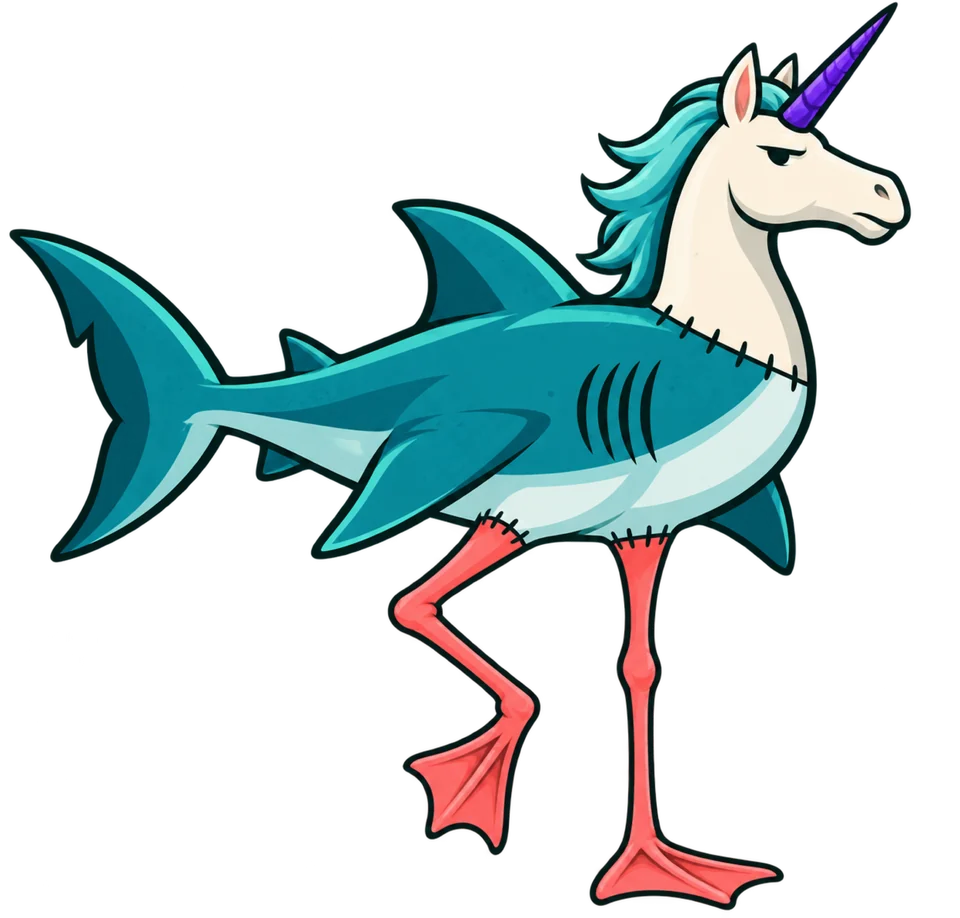
Quite possibly the coolest spelling app ever made.
We checked. The competition was mostly worksheets.
A different game every round
The app has six ways to practise a word, and picks which one each word needs. Here are three, then the spin you earned. Go on.
Something has fallen out of the word. Which letter?
under _ ants
Listen, then spell the missing word.
The head teacher was deeply to arrive at assembly in pyjamas.
Finish a round, earn a spin. It is not rigged. We asked it.
Four sections are coins. Two are parts.
Random drops
Spin the wheel after a round and it sometimes drops a creature part. Most are ordinary. Some are not.
- Frog headCommon
- Shark bodyUncommon
- Octopus tentacle legsRare
- Candy Cane Curl tailSeasonal
Build something unwise
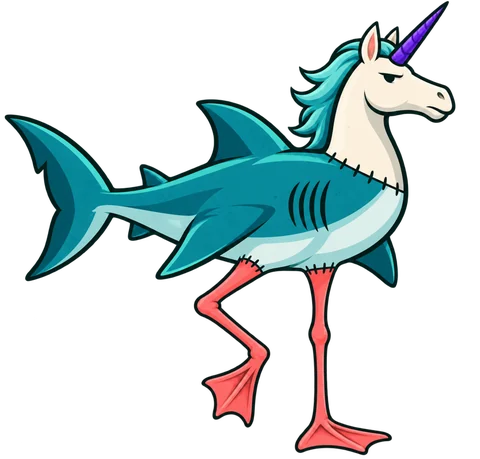
Any head, any body, any legs, and a tail if you like. Name it. Nobody can stop you.
Heads are prefixes, bodies are roots, legs are suffixes. Try not to notice.
Coins, trophies and the Sanctuary
- Earn coins and spend them in the shop.
- School, year and worldwide scoreboards.*
- Trophies to show off in your very own (virtual) cabinet. Can you collect them all?
- Ridiculous beasts to build. A frog’s leg next to a pigeon’s head? Sounds perfect.
*Only if your “responsible” adult switches them on.
Four ways out into the field
Same game, different words. Which ones come up is the app's job.
A map that fills in as you go
 You start here
Six zones, each named for a family of words. You start in the middle. The other five are under cloud until someone goes and looks.
The Bestiary

Every creature you build is numbered, named by you, and filed. The empty pages are still out there.
Ten minutes a day on the list that actually came home from school.
The creatures keep them coming back. What they're practising is built on how spelling is learned.
It practises the real list
You add the words your child brought home. Nothing generic, nothing they'll never be tested on.
Spaced, not crammed
Mega Mix brings earlier words back just as they start to fade, so this week's list is still there next month.
Words taught as parts
Prefix, root, suffix. The creature's head, body and legs map onto them, so the reward teaches the same idea as the lesson.
Spelling it, not spotting it
Pick-the-right-one formats stay locked until a word has been typed correctly twice. Recognising a word isn't the same as producing it.
Made for children who find it hard
Clear letterforms, reader tints, audio that's always one tap away. Help arrives in steps. It never feels remedial.
Rewards that can't be bought
No loot boxes, and nothing to buy with real money. Coins are earned by spelling, and nothing in the game changes which words come up.
Your part takes two minutes a week
-
Add this week's list
Type in the words from the sheet that came home.
-
They play
The app picks the games and the order. Ten minutes is plenty.
-
See what's sticking
Which words are confident, which are still in progress, and which ones to look at together.
Questions parents ask
Who is it for?
Children aged 6 to 16 with a weekly spelling list. The humour is dry enough to hold a teenager.
What does it run on?
Any phone, tablet or computer with a web browser. Nothing to install, and you can add it to your home screen.
Who holds the account?
You do. Your child signs in with a password you set, and you manage their lists and settings.
Does my child’s real name appear anywhere?
Only to you and your child. Everyone else sees a name your child picks from ones the app makes up, like Sneaky Platypus or Slightly Damp Receipt. There is nowhere to type one, so a surname, a school or an age can’t end up in it.
Can other children contact my child?
No. There is no chat, no messaging and no friend requests, and nothing a child types is ever shown to another child. If you switch scoreboards on, other children see a made-up name and a score, and nothing else.
What do you keep about my child?
Their first name, their year group, the name they picked, and how each word has gone. No email address, photo or location. A date of birth only if you choose to add one.
Are there adverts or in-app purchases?
No to both. Nothing costs real money, and there is no tracking: neither this site nor the app uses third-party analytics.
Can I delete their account?
Yes. You can delete everything the app holds about a child from your account: their lists, progress and creatures.
Is it suitable for a dyslexic child?
It was designed with them in mind: clear type, adjustable reader tints, audio replay on every word, and support that steps in gradually.
How long should they play?
About ten minutes. Rounds are short and end on their own, and the app sends no notifications. Missing a day costs nothing: words come back when they are due.
Is any of this based on evidence?
The methods are. Spaced practice, checking and fixing your own attempt, and learning words by their parts all have good research behind them, particularly for dyslexic children. The app itself has not been independently trialled.
Doesn’t choosing between wrong spellings teach the wrong spelling?
It can, so those games stay locked until a word has been typed correctly twice, and the right spelling appears straight away. Most practice is spelling the word from scratch.
Beastly spellings, sorted.
Add this week's list and they can start tonight.